News
Nigeria Remains World Bank’s Third-Largest Borrower With $18.5 Billion

Nigeria has maintained its spot as the third-largest borrower from the International Development Association (IDA), the concessional lending arm of the World Bank.
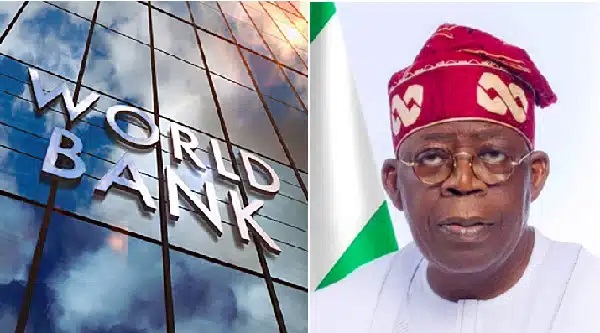
Figures from the IDA’s March 2026 financial report show that Nigeria’s total exposure stood at $18.5 billion as of March 31, down from $18.7 billion recorded at the end of December 2025.
This represents a small decline of $200 million, or about 1.1 per cent, within three months.
However, looking at a full year, the country’s debt level has grown. It rose by $1.2 billion, or 6.9 per cent, compared to the $17.3 billion recorded in March 2025.
In the latest global ranking, Nigeria remains behind Bangladesh and Pakistan among the biggest borrowers from the World Bank’s concessional lending arm.
Bangladesh leads with $22.7 billion, followed by Pakistan with $19.2 billion, while Nigeria holds third place with $18.5 billion.
Among African countries, Ethiopia, Tanzania, and Kenya also rank high, with outstanding debts of $14.4 billion, $14.3 billion, and $13.2 billion respectively.
Overall, the IDA’s total loan portfolio stood at $230.8 billion as of March 2026, slightly lower than the $231.1 billion recorded at the end of 2025.
The report also noted that only a small portion of loans—about 0.4 per cent—are classified as non-performing, while provisions for possible losses stood at $6.3 billion.
Nigeria alone accounts for roughly eight per cent of the IDA’s total lending and about 13.3 per cent of the combined exposure of its top ten borrowers.
These ten countries together make up around 60 per cent of the institution’s total loan portfolio, showing how funds are concentrated among a few developing nations.
Even with the slight quarterly drop, Nigeria’s borrowing trend has continued to rise over time.
The increase from $17.3 billion in March 2025 to $18.5 billion in March 2026 reflects growing dependence on concessional loans to fund development projects and economic reforms.
A similar pattern is seen in other countries. Ethiopia’s exposure rose from $13.2 billion to $14.4 billion, while Tanzania’s increased from $12.6 billion to $14.3 billion.
Bangladesh and Pakistan also recorded steady growth in their borrowing, and Ghana saw a smaller increase from $7.1 billion to $7.4 billion.
Nigeria’s position among the top borrowers highlights its need for funding in areas like infrastructure, social programmes, and economic reforms.
At the same time, the Federal Government is in talks with the World Bank for additional funding.
Reports indicate that Nigeria is seeking a fresh $1.25 billion facility aimed at improving access to finance, expanding digital services, strengthening electricity supply, and supporting reforms in tax, agriculture, and trade.
If approved, this new loan would push the total World Bank funding secured under the administration of Bola Ahmed Tinubu to about $10.6 billion since June 2023.
It would also rank among the largest recent approvals, following the $1.5 billion economic reform support facility granted in June 2024.
Meanwhile, some experts have raised concerns about the country’s rising debt levels, especially as Nigeria’s total debt stock reached about N159 trillion in 2025.
Financial analyst Paul Alaje warned that increasing borrowing means higher repayment obligations in the future.
He pointed out that the burden of these loans will ultimately fall on citizens, including future generations, and stressed that the country’s ability to manage and repay its debts remains a key issue.
“So here is the point, as the volume increases, Nigeria has to pay more, mind you the debt they gave to us is not this year, but as of December 31 2025.
“So by the time we look at the one that we have retired and the new loans that have been approved and some that have been collected this year, it is clear that by the time the DMO is reporting that in the first quarter 2026, we would have crossed $160 billion.
“So it’s more of a burden on the economy. Whether we have the capacity to pay or not is a different kettle of fish,” he added.
ALSO READ: World Bank Approves $12 Million Loan For Nigerian States Hosting IDP Camps




![“He Wanted To Sleep With Me" – Phyna Speaks On Fallout With VeryDarkMan [Video]](https://media.kanyidaily.com/2026/05/24170821/VDM-VeryDarkMan-and-Phyna-1kk-400x240.jpg "“He Wanted To Sleep With Me\" – Phyna Speaks On Fallout With VeryDarkMan [Video] 10")
![“He Wanted To Sleep With Me" – Phyna Speaks On Fallout With VeryDarkMan [Video]](https://media.kanyidaily.com/2026/05/24170821/VDM-VeryDarkMan-and-Phyna-1kk-80x80.jpg "“He Wanted To Sleep With Me\" – Phyna Speaks On Fallout With VeryDarkMan [Video] 11")
![Kayode Are Begins Role As Nigeria’s Ambassador To US, Presents Credentials To Trump [Photos]](https://media.kanyidaily.com/2026/05/24163615/Ambassador-Are-at-White-House1-2026-05-24-298-1045x697-1-400x240.jpeg "Kayode Are Begins Role As Nigeria’s Ambassador To US, Presents Credentials To Trump [Photos] 12")
![Kayode Are Begins Role As Nigeria’s Ambassador To US, Presents Credentials To Trump [Photos]](https://media.kanyidaily.com/2026/05/24163615/Ambassador-Are-at-White-House1-2026-05-24-298-1045x697-1-80x80.jpeg "Kayode Are Begins Role As Nigeria’s Ambassador To US, Presents Credentials To Trump [Photos] 13")