News
IMF Warns Nigeria Against Tinubu’s Plans To Borrow $5bn From Abu Dhabi

The International Monetary Fund (IMF) has expressed concerns about the Nigerian government’s plan to borrow up to $5 billion through a derivatives agreement with First Abu Dhabi Bank (FADB).
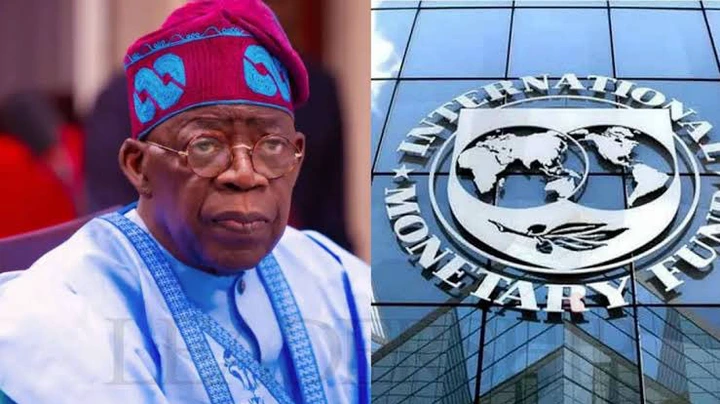
Speaking to journalists on Tuesday, the IMF’s mission chief for Nigeria, Christian Ebeke warned that such financial arrangements can be difficult to understand and may lack transparency.
According to him, transactions like total return swaps (TRS) often involve complicated terms that are not always clear when reviewed across different countries.
Nigeria’s Senate approved the borrowing plan in April, making the country one of several African nations, including Senegal and Angola, that have recently used similar financing arrangements.
According to Ebeke, Nigeria has other funding options that may be more suitable, such as issuing Eurobonds or seeking concessional loans, which usually come with lower borrowing costs.
“Our view is that the transaction in these types of structures carry risks. Usually they are opaque so the terms are not always very transparent when we reviewed these instruments across countries,” he said.
Ebeke added that Nigeria could instead issue eurobonds to finance its deficits or other means to raise funding, including on concessional terms.
The Nigerian government plans to use the money from the proposed deal to refinance existing high-interest debt and fund key infrastructure projects.
In its latest Article IV assessment, the IMF commended the economic reforms introduced by President Bola Tinubu’s administration, saying they have improved economic stability, strengthened investor confidence and enhanced overall macroeconomic management.
The Fund noted that major policy changes since 2023 including the removal of fuel subsidies, tighter monetary policy and the liberalisation of the foreign exchange market, have helped rebuild the country’s financial buffers.
Despite these achievements, the IMF said many Nigerians have not yet benefited from the reforms.
It pointed out that poverty remains high, with about 63 percent of the population living in poverty, while millions continue to struggle with food insecurity.
The report also warned that the progress made so far could be threatened by external factors, including global economic uncertainty and the ongoing conflict in the Middle East.
The IMF added that Nigeria’s foreign exchange reforms and improved economic policies have helped the country regain access to international capital markets, attract foreign portfolio investments and reduce borrowing risks. The Central Bank of Nigeria recently said the country’s gross external reserves have risen to $50 billion, their highest level in 17 years.
However, Ebeke warned that relying heavily on short-term foreign portfolio investments carries risks because such funds can leave the country quickly during periods of uncertainty.
He advised Nigeria to focus more on attracting long-term investments, especially foreign direct investment (FDI), to support sustainable economic growth.
ALSO READ: Nigeria Remains World Bank’s Third-Largest Borrower With $18.5 Billion