Politics
Tinubu Urges US Court To Block Release Of His Records, Citing Privacy Rights

President Bola Tinubu has asked a US court to stop the release of documents connected to past investigations involving him.
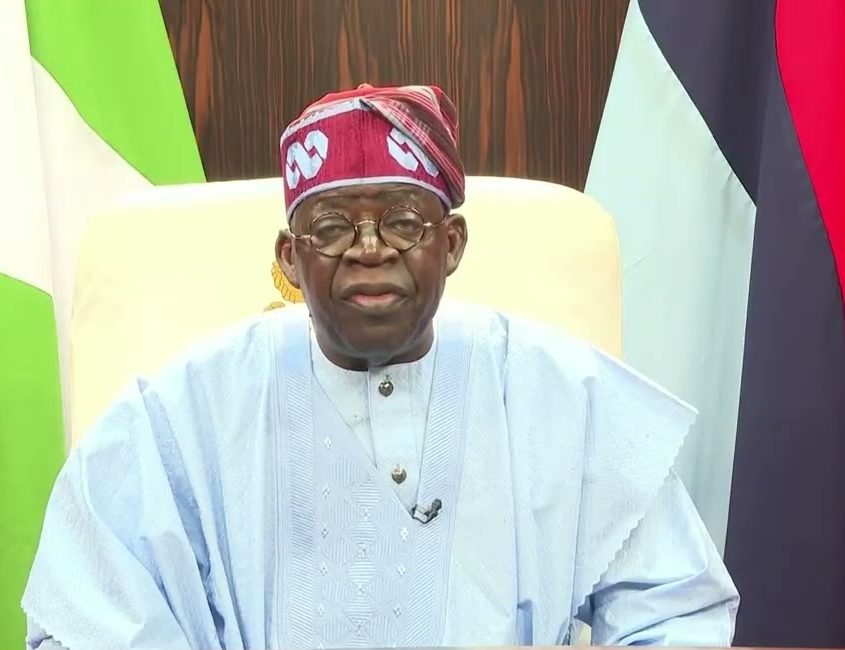
Tinubu argued that the records contain information protected by privacy laws.
He joined the case as an intervenor and made the request in a filing submitted on Friday to the US District Court for the District of Columbia.
His lawyers asked the court to reject Aaron Greenspan’s request for summary judgment and allow the FBI and Drug Enforcement Administration (DEA) to keep certain information redacted or withheld from records they have already released.
Greenspan, the founder of PlainSite, submitted several Freedom of Information Act (FOIA) requests for documents concerning Tinubu.
Among the materials requested were the president’s alleged FBI file and interview records dating from 1992 and 1993.
The requests were part of a wider effort involving 12 FOIA applications sent to six US federal agencies.
Greenspan was seeking investigative records related to a Chicago heroin operation that was active in the early 1990s.
Tinubu was one of four people named in the requests.
In April 2025, US District Judge Beryl Howell ruled that the FBI and DEA had acted improperly when they initially refused to confirm or deny whether they held records concerning Tinubu.
She directed the agencies to search for relevant documents and process any records that were not protected from disclosure.
The agencies later released thousands of pages to Greenspan.
However, parts of the documents were blacked out, and the agencies provided a Vaughn index explaining why some information was withheld.
Greenspan subsequently returned to court, arguing that the agencies had not fully complied with his requests and seeking the release of additional material.
Tinubu said FOIA should not expose private information
In his latest filing, Tinubu’s legal team argued that FOIA is mainly designed to promote transparency about government activities, not to provide private information about individuals whose names appear in government records.
His lawyers said Greenspan’s requests are focused largely on Tinubu himself rather than on determining how the FBI, DEA or other government agencies carried out their duties.
They relied on a 1989 US Supreme Court ruling which stated that releasing information about private citizens generally does little to show how government agencies operate.
The lawyers also cited FOIA Exemption 7(C), which protects certain law-enforcement records when disclosure could result in an unjustified invasion of personal privacy. They also referred to protections under the US Privacy Act.
Tinubu’s team maintained that the FBI and DEA acted properly when they removed or withheld information covered by these protections.
Tinubu’s lawyers also disputed Greenspan’s interpretation of Judge Howell’s 2025 ruling.
A Glomar response allows a government agency to refuse to confirm or deny whether it has records relating to a particular person or matter.
According to Tinubu’s lawyers, Howell’s earlier ruling addressed whether the agencies could hide the fact that Tinubu had been investigated.
They argued that the ruling did not automatically require the release of the contents of any investigative files.
The lawyers said the judge had left room for individual documents and sections of records to be withheld or redacted where the law allowed it.
They also argued that previously published information about Tinubu’s past did not remove his right to privacy over details that had not been made public.
The president’s legal team also rejected Greenspan’s argument that the records should be released because Tinubu is Nigeria’s president.
They argued that public curiosity about Tinubu’s history, political activities or suitability for office does not amount to the type of public interest recognised by FOIA.
According to the lawyers, Greenspan’s filings show that his main objective is to obtain information about Tinubu rather than investigate how US government agencies handled the matter.
They also dismissed suggestions that the records could reveal a hidden prosecution or government cover-up, describing such claims as unsupported.
The lawyers said Greenspan had not provided evidence showing that the FBI, DEA or other government agencies had engaged in wrongdoing.
Tinubu’s lawyers further opposed Greenspan’s complaints about the FBI’s search, the DEA’s Vaughn index and the agencies’ use of FOIA exemptions.
They argued that the case should not be used simply to obtain every government document that contains Tinubu’s name.
The president is therefore asking the court to reject Greenspan’s motion for summary judgment and permit the FBI and DEA to maintain the redactions and withholdings already applied to the released records.
Greenspan began submitting the FOIA requests in 2022 and 2023. The requests were sent to agencies including the CIA, FBI, DEA, Internal Revenue Service, Executive Office for US Attorneys and Department of State.
The records sought were connected to investigations surrounding a Chicago drug-trafficking case from the early 1990s. The names included Tinubu, Lee Andrew Edwards, Mueez Abegboyega Akande and Abiodun Agbele.
Some of the agencies initially used Glomar responses, saying they could neither confirm nor deny whether they had records that matched the requests.
However, in April 2025, Judge Howell ruled that the FBI and DEA had not shown enough privacy justification to conceal the fact that Tinubu had been the subject of a criminal investigation.
She ordered the agencies to search for relevant records and process documents that were not legally exempt, while allowing the CIA to maintain its Glomar response.
Tinubu has continued to deny any wrongdoing connected to the allegations.
ALSO READ: Chicago State University Finally Releases Tinubu’s Academic Records To Atiku