World News
North Korea Fires Missiles Towards Sea Of Japan As US-South Korea Hold Military Drills

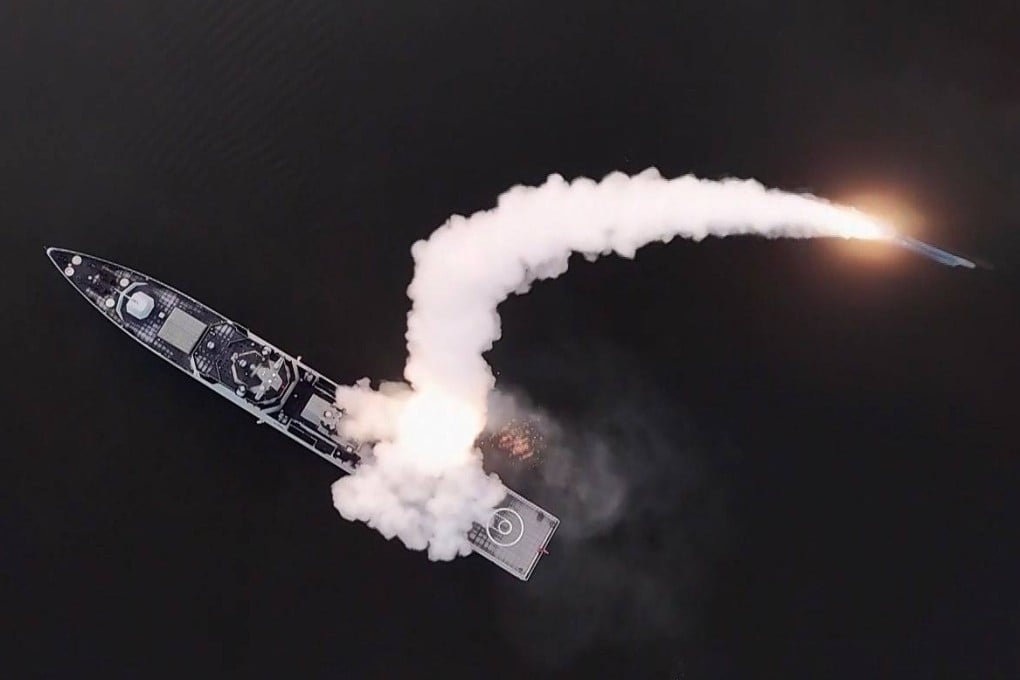
North Korea launched 10 ballistic missiles toward the Sea of Japan on Saturday, according to South Korea’s Joint Chiefs of Staff (JCS).
The launches came only a few days after Pyongyang warned that the ongoing joint military exercises between South Korea and the United States could lead to “serious consequences.”
North Korea also rejected efforts aimed at easing tensions with Seoul, calling the latest peace proposal from the US and its ally South Korea a “clumsy and deceptive farce.”
South Korea’s military said it detected the missiles being fired from the Sunan area near Pyongyang at around 1:20 p.m. local time.
The missiles reportedly travelled about 350 kilometres toward the East Sea, which is South Korea’s name for the Sea of Japan.
Officials added that South Korean and U.S. authorities are currently studying the missiles to determine their exact type and capabilities.
The JCS said the military remains ready to respond strongly to any further provocation.
Japan’s Defence Ministry also confirmed that North Korea launched several ballistic missiles.
It said the missiles reached a height of about 80 kilometres before landing in waters outside Japan’s exclusive economic zone near the eastern coast of the Korean Peninsula.
South Korea’s presidential office, the Blue House, condemned the missile launches, calling them a violation of United Nations Security Council resolutions.
It urged North Korea to stop such actions immediately and ordered government agencies to remain on high alert, especially as the launches occurred during the ongoing joint military exercises between Seoul and Washington.
The missile tests took place only hours after South Korean Prime Minister Kim Min-seok said U.S. President Donald Trump believes a meeting with North Korean leader Kim Jong Un would be beneficial.
For many years, the United States has led international efforts to stop North Korea’s nuclear weapons programme.
However, attempts through talks, sanctions, and diplomatic pressure have produced limited results.
In recent months, the Trump administration has tried to restart high-level discussions with Pyongyang and is reportedly considering a possible summit with Kim Jong Un later this year.
Such a meeting could take place during Trump’s planned visit to Beijing in late March.
During a visit to Asia in October, Trump said he was “100 percent” willing to meet with Kim Jong Un, but North Korea did not respond to the offer.
After ignoring these proposals for several months, Kim Jong Un later suggested that relations between the two countries could improve if Washington recognised North Korea as a nuclear state.
Experts say both the number of missiles launched and the timing of the tests are unusual.
Hong Sung-pyo, a senior researcher at the Korea Institute for Military Affairs, said North Korea often carries out military tests when it wants to attract international attention.
“Global attention is currently focused on the war in the Middle East, and North Korea has historically carried out military provocations when it wants to draw attention to its presence,” he said.
South Korea and the U.S began their annual spring military exercise known as “Freedom Shield” on Monday.
The drills involve about 18,000 South Korean troops and are expected to continue until March 19.
North Korea has long criticised these exercises, claiming they are preparations for an invasion.
The Korean War began in 1950 when the North attacked the South.
Earlier this week, Kim Yo Jong, a close adviser and sister of North Korean leader Kim Jong Un, warned that the drills could lead to “unimaginably terrible consequences.”
She also said the exercises were taking place at a time when global security is becoming increasingly unstable and conflicts are breaking out in different parts of the world.
North Korea has also criticised recent U.S.-Israeli strikes on Iran, describing them as an illegal act of aggression and accusing the United States of acting like a “rogue” nation.
Recently, Pyongyang conducted missile tests from its naval destroyer Choe Hyon and claimed it is working to equip its navy with nuclear weapons.
Leif-Eric Easley, a professor at Ewha University in Seoul, said North Korea has been investing more resources in strengthening its naval forces, possibly with support from Russia.
However, he noted that Kim Jong Un may have observed how quickly U.S. forces were able to destroy much of Iran’s navy during recent fighting.
Because of this, Easley said North Korea is likely to continue missile tests and strong rhetoric about its nuclear command systems to show that it could cause serious damage if its naval forces were attacked.
“North Korea has been devoting greater resources to its navy, with possible support from Russia. But Kim will have noticed that the US was able to sink most of the Iranian navy within a week,” said Leif-Eric Easley.
“So Pyongyang is likely to conduct tests and issue rhetoric about nuclear command, control, and delivery systems to suggest it could inflict unacceptable harm if its naval forces come under attack.”
ALSO READ: North Korea launch missile; after warning foreigners to evacuate South Korea

!["Is Osun Not Tired Of Having A Dancing Governor?" - Okpebholo Mocks Adeleke [Video]](https://media.kanyidaily.com/2026/08/06174949/f73ac7f129d606e3-400x240.jpeg "\"Is Osun Not Tired Of Having A Dancing Governor?\" - Okpebholo Mocks Adeleke [Video] 4")
!["Is Osun Not Tired Of Having A Dancing Governor?" - Okpebholo Mocks Adeleke [Video]](https://media.kanyidaily.com/2026/08/06174949/f73ac7f129d606e3-80x80.jpeg "\"Is Osun Not Tired Of Having A Dancing Governor?\" - Okpebholo Mocks Adeleke [Video] 5")