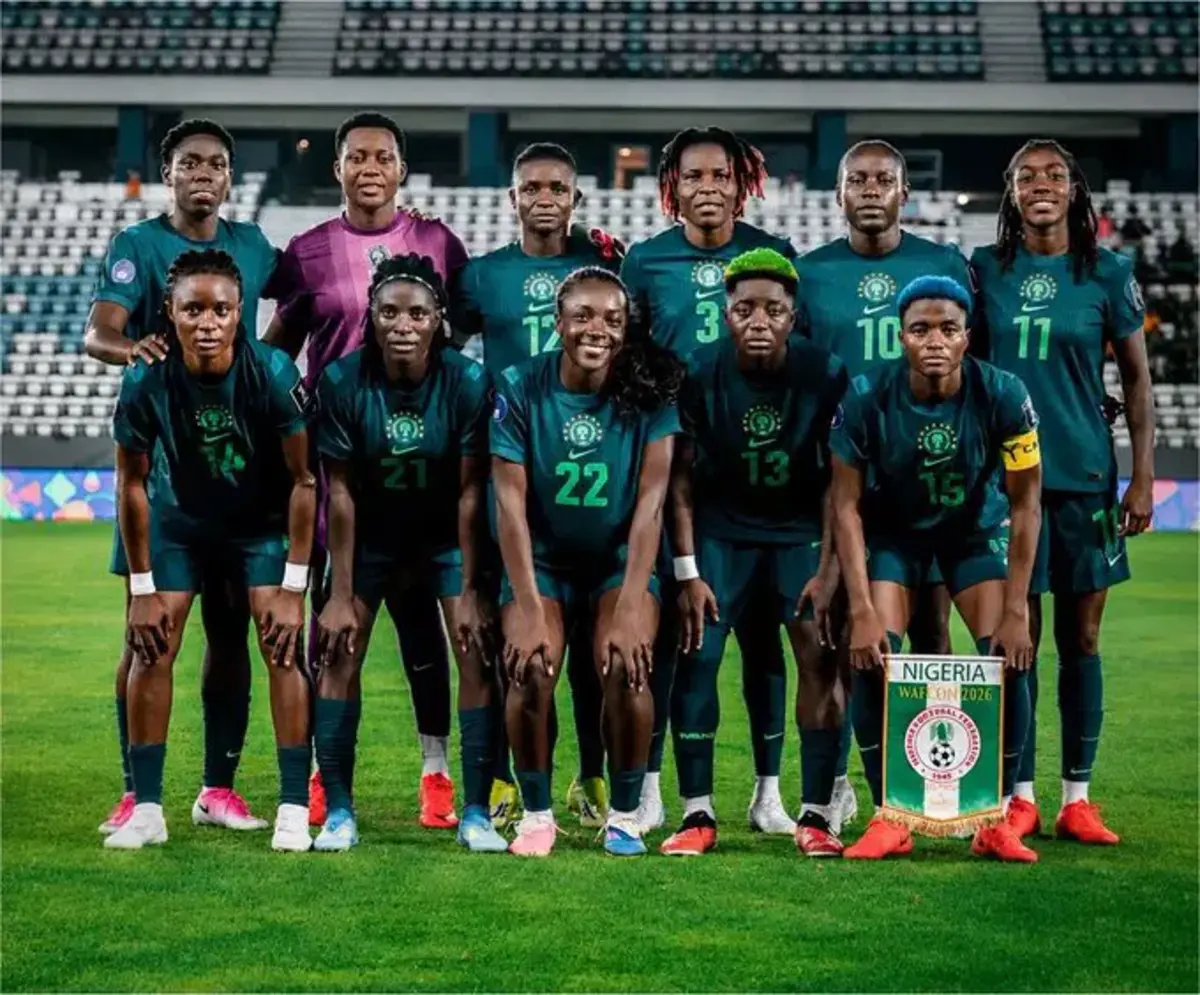
Nigeria will miss out on $2.5 million in FIFA preparation funding after the Super Falcons failed to qualify for the 2027 FIFA Women’s World Cup in Brazil. The shortfall adds a financial cost to a campaign that ended the country’s record of appearing at every edition of the tournament.
FIFA announced on October 22 that preparation funding for each participating national association would rise to $2.5 million, bringing it in line with the amount available to teams at the 2026 men’s World Cup. Preparation funding is paid to teams that qualify, and Nigeria will not receive it. The tournament runs from June 24 to July 25, 2027. FIFA has said further details on the wider financial model, including prize money and payments through its club benefits programme, will be discussed at its Council meeting in December 2026.
Each of the 32 participating associations will receive $2.5 million, bringing total preparation funding to $80 million. The grant is separate from prize money. The amounts involved in prize money and the surplus distribution have not been disclosed, so the total value of the earnings Nigeria has missed cannot yet be calculated.
The Super Falcons’ qualification bid fell apart at the 2026 Women’s Africa Cup of Nations in Morocco. Nigeria entered as defending champions and ten-time winners, but lost 1-0 to Cameroon in the quarter-finals on August 8, missing one of Africa’s four automatic World Cup places. A play-off against South Africa followed, and the Super Falcons lost 2-1 to Banyana Banyana on August 13.
The result marks the first time Nigeria has missed the Women’s World Cup since the tournament began in 1991. The team had appeared in all nine previous editions. It had also won a record-extending 10th WAFCON title in 2025.
After the failure to qualify, the Nigeria Football Federation (NFF) asked head coach Justine Madugu and his technical crew to step down. It also set up a fact-finding committee to investigate the team’s performance and wider problems affecting Nigeria’s national teams.