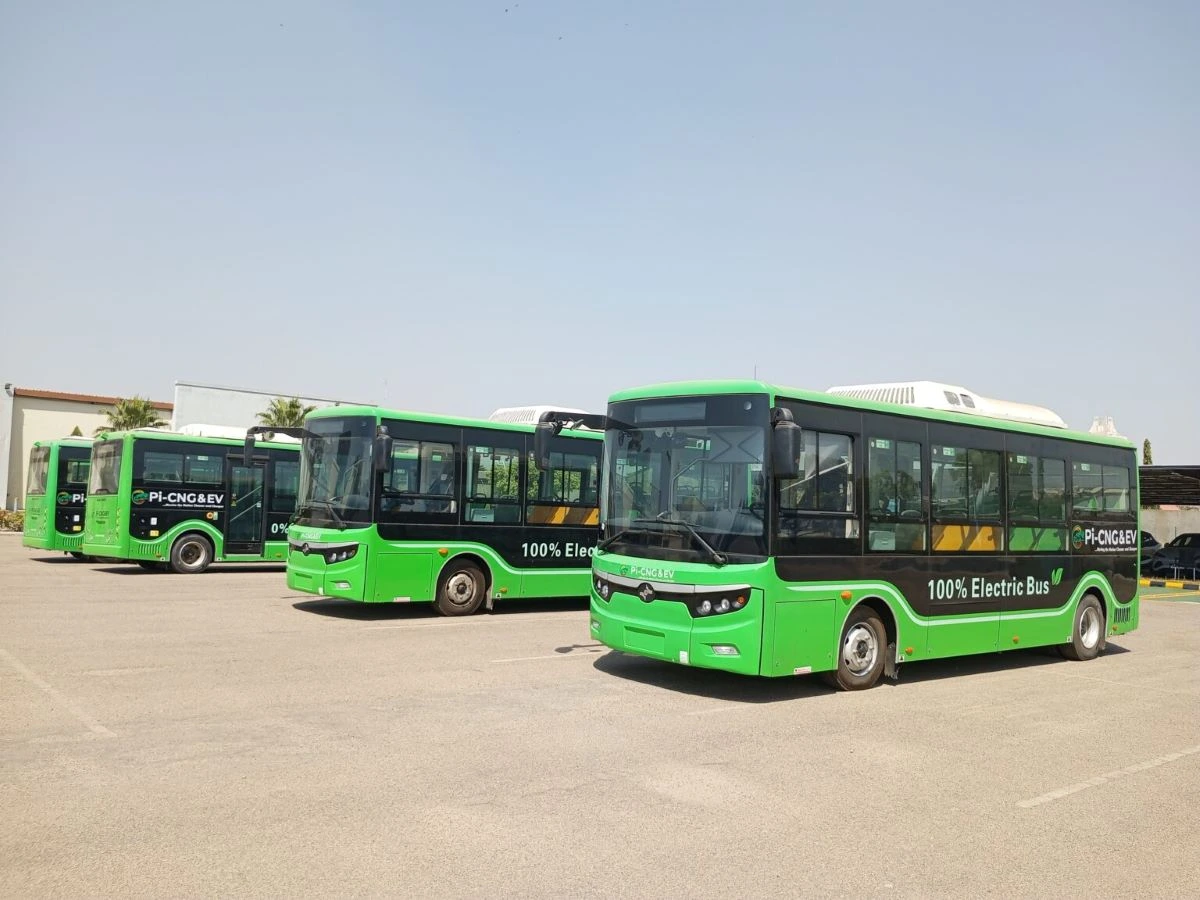
KANO, Nigeria — The Federal Government has handed five electric buses to two transport operators in Kano State, with the aim of cutting commuter fares by at least 40% compared with prevailing conventional transport fares.
The deployment was disclosed by the Presidential Initiative on Compressed Natural Gas and Electric Vehicles, and reported by the News Agency of Nigeria on Saturday, November 1, 2026. Each bus has a 20-seat capacity. The buses went to Camel Mobility and Kano Metropolitan Transport Company.
Speaking at the handover ceremony in Kano, Ahmed Katuka, Manager of Assets at the initiative, said the buses would complement the existing fleet of 14-seat and high-capacity buses already deployed to the state under the programme. He said the intervention was also expected to lower carbon emissions, improve passenger safety and comfort, and encourage private-sector participation in cleaner urban mobility.
Ahmed Garba-Ahmed, Chief Operating Officer of Camel Mobility, welcomed the deployment and said the company would put the buses into service. He said similar electric buses already operate in Abuja, Lagos and other parts of the country. He called on the Kano State Government to provide dedicated transport corridors, designated bus stops, a supportive operating environment and adequate security to help the vehicles run efficiently.
Ahmad Rufai-Yusuf, Manager of the Kano Division of Kano Metropolitan Transport Company, said electric buses would reduce fuel-related operating costs for transport operators. He said those savings could in turn help lower fares for passengers.
The move is part of the Federal Government’s wider push to shift commercial transport away from petrol and diesel towards alternative fuels. The Lagos Metropolitan Area Transport Authority has also begun phasing out diesel buses from its regulated system. Under a policy that took effect at the start of 2026, new buses entering that system must run on compressed natural gas or electricity, and existing diesel buses are being replaced over time. The authority had about 150 compressed natural gas buses before receiving 20 additional high-capacity buses from the Federal Government in September.
Ismael Ahmed, Chairman of the Presidential Initiative, has proposed making the switch to compressed natural gas mandatory for commercial vehicles. He said Nigeria has about 12 million vehicles, with commercial vehicles making up an estimated 55% to 60% of them. He also noted that lower fares have already been recorded on some routes served by compressed natural gas and electric buses, although the reductions have yet to reach passengers widely.
The Federal Government is targeting the conversion of one million commercial petrol vehicles to compressed natural gas by 2027 and plans to expand the national network of refuelling stations to 1,000. About 120,000 vehicles had been converted as of the latest data published on the initiative’s website, and the programme has attracted more than $2.5 billion in investment.
The 40% fare reduction is a projection by the initiative, not a measured outcome. Whether passengers see that saving will depend on the operators’ costs, the state’s road and stop infrastructure and how the buses perform on the routes they serve.