
LAGOS, Nigeria — Stakeholders in Nigeria’s care sector say the country’s care economy could generate between 9.4 million and 17 million jobs and add at least $9.3 billion to gross domestic product, if investment, access to finance and government coordination improve.
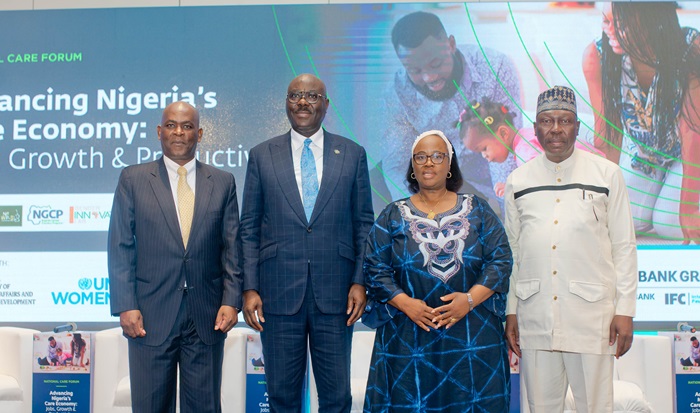
The call was made at the National Care Forum, organised by the World Bank Group in Lagos on Tuesday, November 17, 2026, under the theme “Advancing Nigeria’s Care Economy: Jobs, Growth and Productivity.” The forum brought together government officials, development partners, financial institutions, childcare providers, employers and civil society organisations.
Ayodele Fashogbon, Senior Economist at the World Bank Group’s Gender Innovation Lab, presented a report on the economic case for childcare. He said women spend an average of 76 minutes a day on childcare, compared with 13 minutes for men. About 33 million children aged zero to five have no access to centre-based childcare.
According to the report, women’s employment falls by about 36% after a child under six arrives, while men’s employment rises by about 10%. Expanding access to quality childcare could raise women’s employment by 8.5%, women’s income by 22.5% and household income by about 44%. Closing the gender gap in labour-force participation could add as much as $22.9 billion a year to Nigeria’s gross domestic product.
Fashogbon identified access to finance as a major constraint. About 75% of childcare providers struggle to secure funding, and only 5% of private-sector employers invest in childcare. He called for more investment in childcare facilities, professional training, subsidies and employer-supported services.
The Director of Child Development in the Ministry of Women Affairs and Social Development, Andrew Ali Madogo, speaking on behalf of the Minister, Hajiya Imaan Sulaiman-Ibrahim, said UN Women’s 2026 modelling for West and Central Africa estimated the job and economic gains. He said the Federal Executive Council approved three national instruments on October 28, 2026: the National Care Policy and Implementation Plan 2026 to 2030, the National Programme on Violence Against Children, and the National Policy on Mental Health and Ageing Management 2026 to 2030.
The National Care Policy covers childcare, early childhood development, elder care, disability support, the welfare of care workers and family-friendly workplaces. It proposes a National Care Fund to provide sustainable financing, which the ministry is developing with UN Women, the United Nations Children’s Fund, the World Bank and CARE Africa. Madogo urged state governments to adopt the policy and called for training, decent wages and better working conditions for care workers.
The Lagos State Government said it is developing an investment-focused care policy framework to strengthen gender inclusion and attract private-sector participation. Abayomi Oluyomi, Commissioner for Finance and Chairman of the Lagos State Public Procurement Agency, speaking for Governor Babajide Sanwo-Olu, said the state would set regulations and safety standards for childcare businesses and work with financial institutions on financing models.
Christian Mulamula, Head of the World Bank Group’s Nigeria Office at the International Finance Corporation, said about 92% of childcare facilities are small and independently owned, and 76% of childcare entrepreneurs lack access to formal finance. He said a World Bank-supported programme has developed Nigeria’s first national occupational standards for childcare, and that more than 4,500 aspiring caregivers and entrepreneurs, about 90% of them women, are being trained under it.