Tech and Gadgets
US Data Firm Removes Kled App In Nigeria Over ‘Massive Fraud’

Kled AI, a United States–based data marketplace that pays users to upload photos, videos, and other types of digital content, has stopped operating in Nigeria after uncovering what it described as massive fraud.
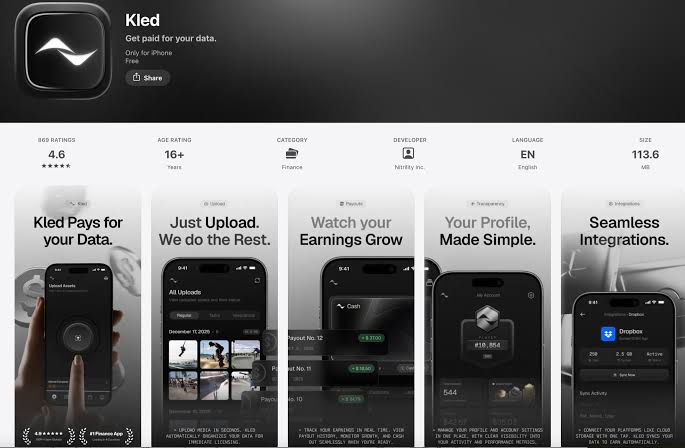
Launched in 2025, the platform connects everyday users with AI companies that need high-quality data to train their systems.
The company’s founder, Avi Patel, who is 22, said the app has been removed from Nigeria’s app store, and access from the country has been blocked.
This decision followed findings that about 95 percent of user activity coming from Nigeria was fraudulent.
Kled AI, which rewards users for submitting data, had already paid out hundreds of thousands of dollars within four months,but the level of abuse reportedly became too much to manage.
In a post on X, Avi Patel explained that many users were uploading useless or fake content, including blank images, repeated files, internet-sourced pictures, and AI-generated visuals.
He also claimed that during the Know Your Customer (KYC) checks, some individuals submitted large numbers of fake Japanese passports altered with Nigerian faces.
The founder said the company removed the app locally and blocked access from Nigeria after seeing how widespread the issue had become.
He noted that the move may not be permanent, adding that the company could return once it improves its fraud detection systems.
He wrote, “We have removed Kled from the Nigerian app store and IP banned the entire region.
” The first thing I would like to say is I have nothing against Nigeria. I have a ton of friends from this region and these were some of our earliest app adopters. Genuinely, thank you all for the support.
“Kled has been up and running and out of beta for 4 months now. We have paid out hundreds of thousands of people for their data, and our users have uploaded over 1 billion assets onto our platform.
“After several months of uploads we found that Nigeria had a ≈95% fraud rate. Instead of real, usable data, users were uploading pictures of black screens, duplicate photos, internet generated images, AI generated images, etc. at an unimaginable scale.
“In comparison, Malaysia, Indonesia, and the Philippines have a less than 10% fraud rate across 10x the userbase size.
“Our fraud system is fast to catch these issues but the level of complexity of these schemes is getting out of hand.
“This weekend we were flooded with thousands of fake Japanese passports and identity cards with Nigerians photoshopped onto them in our KYC system. That was the final straw.
“As a startup we can’t afford to eat the costs of that data overhead, so we temporarily removed the app from the region while we improved our fraud detection and banning system to quickly filter out bad actors when the time is right.
“On top of all of this, every time we make a post there is someone asking us to bring the region back within seconds. We hear you, but it’s gotten out of hand.
“We’ve made this decision with great care. We love everyone who has genuinely supported Kled from Nigeria, and we hope to return when the time is right.”
The announcement triggered mixed reactions among Nigerians with some people admitting that online fraud exists in similar platforms, others say they are unfamiliar with Kled AI and believe the announcement may simply be a publicity move.
ALS0 READ: FBI Offers $10,000 Reward For Nigerian Man Wanted Over Alleged Bank Fraud








![Alex Iwobi Reveals Harsh Reality Of Playing For Nigeria's Super Eagles [Video]](https://media.kanyidaily.com/2026/08/04142844/Alex-Iwobi-400x240.jpg "Alex Iwobi Reveals Harsh Reality Of Playing For Nigeria's Super Eagles [Video] 12")
![Alex Iwobi Reveals Harsh Reality Of Playing For Nigeria's Super Eagles [Video]](https://media.kanyidaily.com/2026/08/04142844/Alex-Iwobi-80x80.jpg "Alex Iwobi Reveals Harsh Reality Of Playing For Nigeria's Super Eagles [Video] 13")