News
Nigerians Have Right To Film Police During Stop-And-Search Operations – Court

A Federal High Court in Delta State has ruled that Nigerians are free to record police officers while they carry out stop-and-search duties in public places.
The ruling was delivered on Tuesday by Justice Hyeladzira Nganjiwa, following a fundamental rights case filed by a lawyer, Maxwell Nosakhare Uwaifo.
In his suit, Uwaifo also asked the court to determine whether it is lawful for police officers to conduct stop-and-search operations without displaying their names and service numbers, as well as whether citizens have the right to film such activities.
Those listed as respondents in the case include the inspector-general of police, the Nigeria Police Force, the Police Service Commission, and the attorney-general of the federation.
Speaking after the ruling, Uwaifo said the judgment addressed key issues around police accountability and the rights of citizens.
He noted that the court made it clear that “anonymous policing” is not allowed under the law.
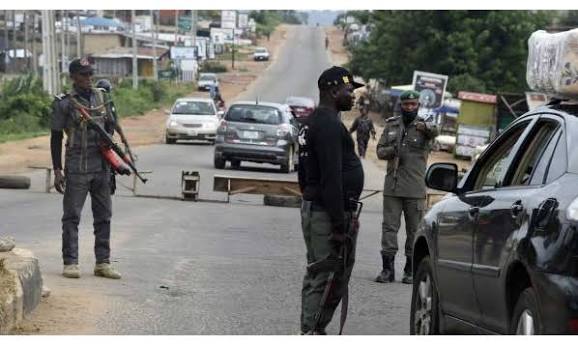
During the hearing, the lawyer told the court that his action was triggered by an incident on May 10, 2025, along the Sapele roundabout while travelling from Benin to Warri.
According to him, he was stopped by officers who questioned him in what he described as an aggressive manner.
He said he became concerned about possible harassment or extortion and decided to record the encounter with his phone.
However, one of the officers allegedly threatened to arrest him and ordered him to stop recording.
“Immediately I brought out my phone, one of the men, dressed in black and appearing to be a police officer, threatened to arrest me and demanded that I put my phone away,” the lawyer said.
“They did not wear any name tags, nor did they introduce themselves. They also made no effort to disclose their identity or provide a reason for their conduct.
“The vehicle they used was a Toyota Sienna, painted black, with no police inscription, no plate number, and no markings whatsoever to identify it as a police vehicle.
“The entire interaction was intimidating, and the men created a hostile atmosphere. I could not confidently ask questions or even continue to record for fear that I would be manhandled or unlawfully detained.
“I had to comply in fear, and leave quietly because I did not want to risk being physically assaulted, arrested, or having my phone forcefully taken from me.
“Due to this fear and their threatening demeanor, I could not gather any concrete evidence, and I also could not record the video or identify them clearly due to the absence of name tags and their use of an unmarked vehicle.
“I have heard and seen many similar instances where police officers intimidate, harass, and even assault Nigerians simply for recording them or questioning their unlawful acts at checkpoints.”
In his requests to the court, Uwaifo argued that under Section 39 of the 1999 Constitution, Nigerians have the right to express themselves freely, including recording law enforcement officers performing their duties in public.
He also asked the court to declare it illegal for police to threaten, arrest, or seize devices from individuals who are recording them.
“A Declaration that the acts of police officers engaging in patrols, stop and search operations, and other public interactions without wearing uniforms that visibly display their names and force numbers is unconstitutional, illegal, and a breach of sections 34, 35, and 36 of the Constitution and the Police Act,” part of the reliefs sought reads.
“An Order of Perpetual Injunction restraining the Respondents, their agents, officers, or privies from further engaging in stop and search or checkpoint operations without ensuring all operatives wear uniforms bearing their full names and force numbers.
“An Order directing the 1st to 3rd Respondents to issue a clear directive and training guideline to all officers of the Nigeria Police Force affirming the public’s right to record and report police activities conducted in public spaces, including at checkpoints and during stop and search.
“An Order mandating the 2nd and 3rd Respondent to discipline any officer found to have acted in breach of this right.
“An Order mandating the 3rd Respondent (Police Service Commission) to issue a circular or directive mandating all officers on public engagement duties to wear full uniforms with identification, and to initiate disciplinary action against any defaulters
“The sum of N80,000,000 only as general and exemplary damages against the Respondents for the repeated infringements of the rights of the applicant and members of the public.”
The police did not appear in court during the proceedings, although the attorney-general of the federation was represented by Babatunde Ajajogun and D.O. Tarfa.
In his judgment, Justice Nganjiwa affirmed that Nigerians have the constitutional right to record police officers in public.
He also ruled that officers must wear uniforms with clear identification, including name tags and service numbers.
The court further held that it is unlawful for police to intimidate, harass, arrest, or seize devices from citizens for recording them.
As part of the ruling, the court awarded N5 million in damages for the violation of Uwaifo’s rights and an additional N2 million to cover legal costs.
KanyiDaily also reported how Gunmen attacked a police border checkpoint in Kebbi State, killing two officers who were on duty.