News
NNPCL Blames PENGASSAN Strike As Cooking Gas Price Hits N3,000 Per Kg

The Nigerian National Petroleum Company Limited (NNPCL) has explained that the current scarcity and surge in the price of cooking gas were caused by disruptions during the recent strike by the Petroleum and Natural Gas Senior Staff Association of Nigeria (PENGASSAN).
NNPCL’s Group Chief Executive, Bayo Ojulari, said the industrial action temporarily halted loading and distribution for several days, creating an “artificial increase” in prices.
PENGASSAN had gone on strike to protest the dismissal of Nigerian workers at the Dangote Refinery but suspended the action on October 1 following the intervention of the Federal Government.
The strike, however, caused a ripple effect nationwide, leading to gas shortages and steep price hikes.
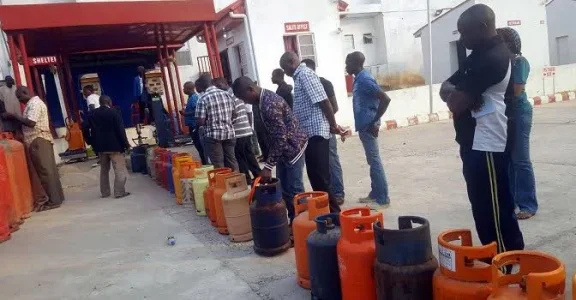
In Lagos and other major cities, residents now pay between ₦2,500 and ₦3,000 per kilogram, with many gas plants and filling stations running out of stock.
Speaking with reporters after visiting President Bola Tinubu at the State House on Sunday, Ojulari said the temporary shutdown in operations delayed gas movement and loading by a few days.
“The increase you saw was relatively artificial because for the period of the strike, movements and loading were delayed by about two, three days.
“And because of that, you see that impact. As things return back to normal, it takes some time for distribution to be fully restored,” he added.
Ojulari also accused some retailers of taking advantage of the situation to raise prices, assuring consumers that the situation would stabilise soon, noting that prices should fall back to their previous levels as supply normalises.
“As you know, in Nigeria, people take opportunity. With that delay, some of the people who had existing resources and reserves had to put up the price.”
“My expectation is that now that things are back to normal, prices should return to what they were before the strike,” the NNPCL CEO stated.
KanyiDaily recalls that the suspension of PENGASSAN’s strike came after the Dangote Group agreed to reinstate the affected workers following the government’s mediation.