Business
Web Summit Qatar 2026 Opens in Doha as Global Tech Power Shifts Take Centre Stage

Web Summit Qatar 2026 opened in Doha on Sunday, drawing tens of thousands of founders, investors, policymakers and technology leaders to what organisers describe as one of the Middle East’s largest digital economy gatherings.
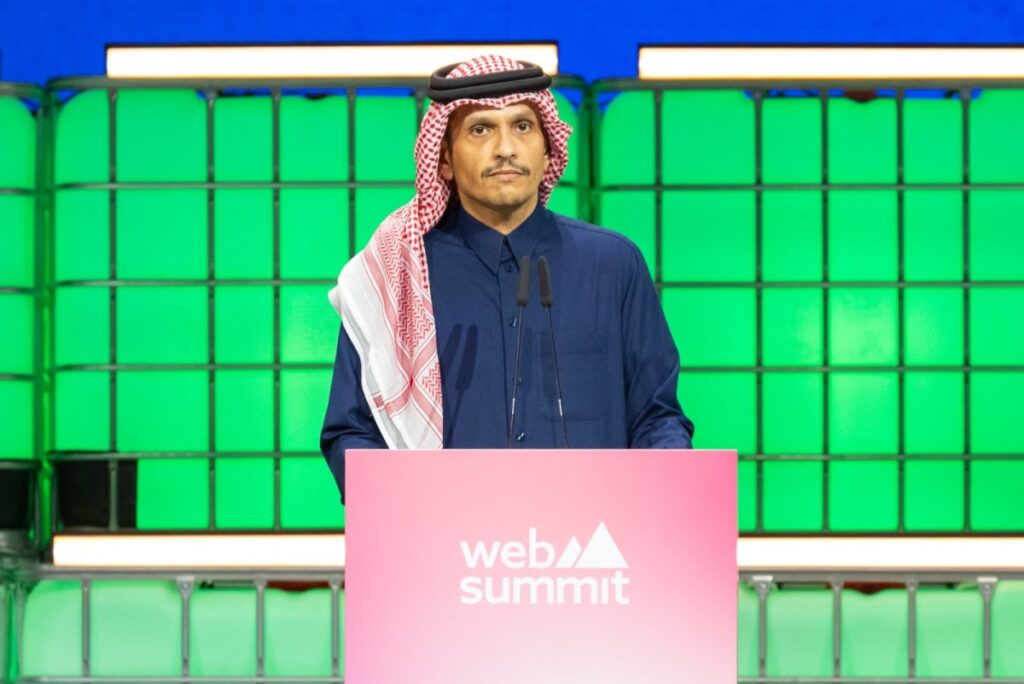
The Prime Minister and Minister of Foreign Affairs
Held at the Doha Exhibition and Convention Centre, the summit has brought together more than 1,600 startups and nearly 1,000 investors from 127 countries. Organisers say attendance has doubled in just two years, a sign of how quickly Web Summit Qatar is positioning itself as a major bridge between the Middle East and the wider global tech ecosystem.
Across the week, conversations will span artificial intelligence, quantum technologies and climate innovation, as well as tech geopolitics, digital regulation and the creator economy. Against a backdrop of global political and economic uncertainty, many of the discussions reflect growing concerns about technological leadership, power and influence.
For Qatar, the summit is part of a broader national strategy. The country is using Web Summit to reinforce its role as a regional connector at the crossroads of Europe, Asia and the Global South. Over the past decade, Doha has increasingly leveraged high-profile international events to project influence beyond energy and mediation, showcasing ambitions in innovation, investment and diplomacy. The approach mirrors similar efforts by countries such as Azerbaijan, which have turned global gatherings into tools for strengthening international visibility.
This year’s speaker lineup includes Canva co-founder Cliff Obrecht, IBM Chief Impact Officer Justina Nixon-Saintil, Twitch creator Hasan Piker and Morocco’s Minister of Digital Transition Amal El Fallah Seghrouchni, alongside senior executives from Google, Meta, Amazon and Microsoft. More than 840 international journalists are covering the event.
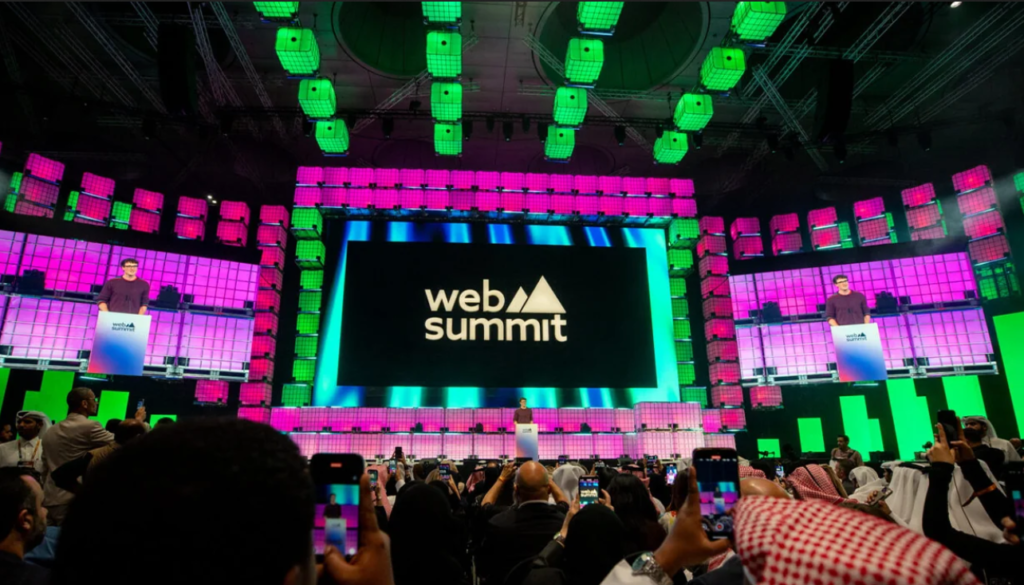
Major global companies including TikTok, Google Cloud, IBM, Figma, Amazon and Snapchat have set up interactive booths showcasing tools in AI, robotics and cloud technology. Qatar-based firms — such as Qatar Airways, Ooredoo, talabat, Snoonu, PayLater and Qatar Science & Technology Park — are also presenting products, highlighting efforts to build a more diversified domestic tech ecosystem.