News
House Of Reps Condemns US Bill Alleging Killing Of Christians In Nigeria

The House of Representatives has criticised a bill introduced by US lawmakers that seeks to hold Nigerian government officials responsible for allegedly “facilitating the mass killing of Christians.”
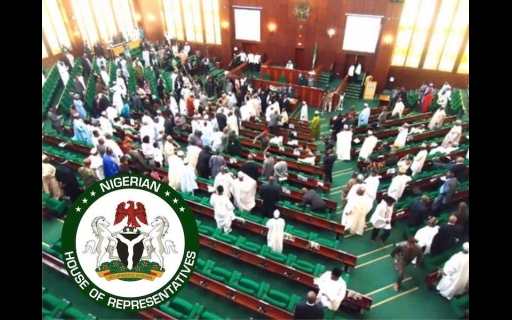
The lawmakers in the lower chamber rejected the claim, stating that there is no government-backed persecution of Christians or any religious group in Nigeria.
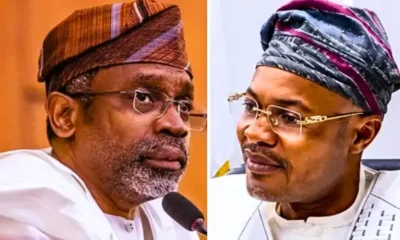
The resolution was passed during Wednesday’s plenary after members adopted a motion jointly sponsored by Deputy Speaker Benjamin Kalu and 259 other lawmakers.
The bill, proposed by US Senator Ted Cruz and titled the “Nigeria Religious Freedom Accountability Act of 2025,” seeks “targeted sanctions against Nigerian officials who enforce Sharia and blasphemy laws.”
He called on the “US secretary of state to designate Nigeria as a country of particular concern”; and maintains that “Boko Haram and ISIS-West Africa remain designated as entities of particular concern”.
In his motion, the Deputy Speaker Benjamin Kalu said the US Commission on International Religious Freedom (USCIRF) recently recommended Nigeria for a Country of Particular Concern (CPC) designation.
He argued that the recommendation ignored Nigeria’s constitutional guarantees of freedom of thought, conscience, and religion, as well as efforts by successive governments, security agencies, faith leaders, and civil society to protect worshippers and prosecute offenders.
Kalu highlighted that Nigeria’s insecurity is complex, driven by insurgency, criminal banditry, farmer-herder conflicts, separatist movements, and communal violence, affecting people of all faiths.
He noted that international reports attribute most fatalities to terrorist groups and criminal gangs rather than government policies or religious bias.
The deputy speaker said external legislative actions “based on incomplete or decontextualised assessments” risk undermining Nigeria’s sovereignty, misrepresenting facts, straining strategic relations, and unintentionally emboldening violent actors.
Majority Leader Julius Ihonvbere added that the bill has passed the US Senate’s second reading and, if enacted, could force Nigeria to expend significant resources to address its effects.
He emphasized that Nigerians are more concerned with economic, social, and security challenges than religious persecution.
“There is an agenda designed to mark the progress made so far in Nigeria’s democracy,” he said.
Oluwole Oke, chairman of the House Committee on Foreign Affairs, criticized the US Senate for excluding Nigerian representatives from the bill’s public hearing.
“It is a deliberate attempt to damage Nigeria’s image,” he said.
Edo State lawmaker Billy Osawaru described the situation as “global politics,” noting that Nigeria lacks an ambassador in the US to clarify the facts.
“It is not enough to say we are being targeted, but we must implement a system to fight this. Nigeria does not have an ambassador in the US. If we let this scale through, Nigeria will be the first in Africa,” he said.
In response, the House rejected the “narratives that frame Nigeria’s security crisis as a singularly religious conflict or as state-sponsored persecution, and reaffirms Nigeria’s constitutional protections for freedom of religion and belief”.
The parliament directed the Ministry of Foreign Affairs and Nigeria’s embassy in Washington, DC, to lodge a formal complaint at the United Nations.
The House also called for a Nigeria-US joint fact-finding mission and dialogue and tasked the Committee on Legislative Compliance with overseeing the implementation of the resolutions and reporting back within 28 days.
KanyiDaily recalls that Christians in Plateau State previously came together to stage a peace walk in protest of the continued killings affecting local communities.