
News
NCAA To Sanction Airports Operating Without Valid Permits Starting January 2026

The Nigeria Civil Aviation Authority (NCAA) has announced that starting January 1, 2026, airports in the country operating without valid permits will face penalties.
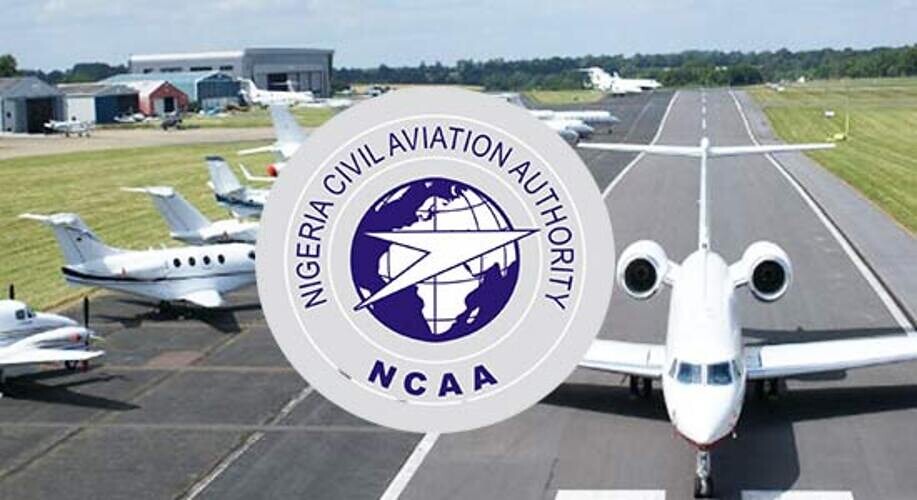
Godwin Balang, who heads the NCAA’s Aerodrome and Airspace Standards, revealed this on Monday at a meeting with airstrip owners and operators in Lagos.
He explained that the decision is not meant as a threat but shows a shared commitment to improving aviation standards.
“The aviation landscape has changed drastically in recent years, so our regulatory strategies must align with today’s realities for more impactful results,” Balang said.
He pointed out that out of the 92 airstrips listed by the NCAA — including those that are functional, inactive, under construction, or being upgraded — only a small number currently have valid operating permits.
Balang noted that 68 of these airstrips are owned by the federal government through the aviation ministry, while 24 are privately owned.
He emphasized the need for closer cooperation between the NCAA and the ministry to better define their respective roles.
Citing Section 71(3) and (4)(a) of the Civil Aviation Act 2022, Balang said the NCAA is responsible for certifying airstrip operations and setting minimum safety standards for how they are built, managed, and maintained.
He stressed that the goal is to improve safety while making better use of Nigeria’s airstrips to support the country’s economic growth.
“There is a need to fashion out strategies to address emerging threats while maximising the use of the airstrips to contribute significantly to our socio-economic development as a nation.
“We are conscious of the fact that one day is obviously not enough to exhaust discussions on this important subject,” Balang said.
Also speaking at the event, NCAA’s Director-General, Chris Najomo, explained that the meeting was organized to strengthen communication with airstrip operators, clear up any confusion about construction and operational rules, address any challenges they face, find areas for collaboration, and encourage the adoption of global best practices.
Najomo revealed that the NCAA is working on specific regulations designed for airstrips, aiming to boost general aviation without sacrificing safety.
“The engagement is to enhance communication with state and private airstrip operators; clarifying construction, operational, and safety requirements; identifying and addressing operator challenges; exploring development partnerships; and promoting global best practices.
“While ICAO Annex 14 standards may be over‑reaching for smaller airstrips, our tailored framework will catalyse development and maintain safety,” he added.
Najomo also pointed out that keeping high safety standards fits into the aviation minister’s five-point agenda for improving the sector.
ALSO READ: NCAA Clears Max Air To Resume Operations After Three-Month Suspension




!["God Is The Reason For My Success, Not Don Jazzy" – Wande Coal [Video]](https://www.kanyidaily.com/wp-content/uploads/2026/08/Wande-Coal-Don-Jazzy-400x240.jpg "\"God Is The Reason For My Success, Not Don Jazzy\" – Wande Coal [Video] 8")
!["God Is The Reason For My Success, Not Don Jazzy" – Wande Coal [Video]](https://www.kanyidaily.com/wp-content/uploads/2026/08/Wande-Coal-Don-Jazzy-80x80.jpg "\"God Is The Reason For My Success, Not Don Jazzy\" – Wande Coal [Video] 9")




![Veteran Actor Taiwo Hassan ‘Ogogo’ Buried In Ilaro [Video]](https://www.kanyidaily.com/wp-content/uploads/2026/08/Ogogo-1-400x240.jpeg "Veteran Actor Taiwo Hassan ‘Ogogo’ Buried In Ilaro [Video] 14")
![Veteran Actor Taiwo Hassan ‘Ogogo’ Buried In Ilaro [Video]](https://www.kanyidaily.com/wp-content/uploads/2026/08/Ogogo-1-80x80.jpeg "Veteran Actor Taiwo Hassan ‘Ogogo’ Buried In Ilaro [Video] 15")