Travel
US Imposes $15,000 Visa Bond On Nigerians And Other Nationals

Nigerians and other applicants for the United States B1/B2 visitor visas may now be asked to pay visa bonds of up to $15,000 under a new policy announced by the U.S. State Department.
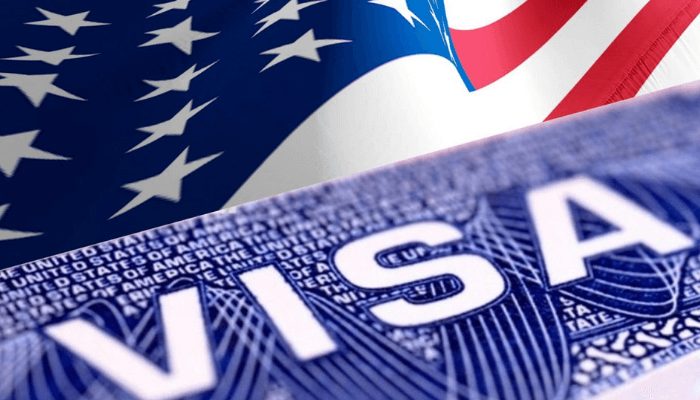
These bonds serve as financial guarantees for applicants from countries considered high-risk and are meant for travellers seeking visas for business or tourism.
The measure follows earlier partial travel restrictions placed on Nigeria and some other countries.
Information on the U.S. State Department’s official website explains that any bond paid without instruction from a consular officer will not be refunded and does not ensure that a visa will be issued.
Out of the 38 countries listed, 24 are in Africa, including Nigeria, and each country has an implementation date attached to it.
Some of the countries affected are Algeria (21 January 2026), Angola (21 January 2026), Antigua and Barbuda (21 January 2026), Bangladesh (21 January 2026), Benin (21 January 2026), Bhutan (1 January 2026), Botswana (1 January 2026), Burundi (21 January 2026), Cabo Verde (21 January 2026), Central African Republic (1 January 2026), Côte d’Ivoire (21 January 2026), Cuba (21 January 2026), Djibouti (21 January 2026), Dominica (21 January 2026).
Others are; Fiji (21 January 2026), Gabon (21 January 2026), The Gambia (11 October 2025), Guinea (1 January 2026), Guinea-Bissau (1 January 2026), Kyrgyzstan (21 January 2026), Malawi (20 August 2025), Mauritania (23 October 2025), Namibia (1 January 2026), Nepal (21 January 2026).
The rest are; Nigeria (21 January 2026), São Tomé and Príncipe (23 October 2025), Senegal (21 January 2026), Tajikistan (21 January 2026), Tanzania (23 October 2025), Togo (21 January 2026), Tonga (21 January 2026), Turkmenistan (1 January 2026), Tuvalu (21 January 2026), Uganda (21 January 2026), Vanuatu (21 January 2026), Venezuela (21 January 2026), Zambia (20 August 2025), and Zimbabwe (21 January 2026).
For Nigeria, the U.S. cited security challenges involving terrorist groups in parts of the country and difficulties with screening processes as reasons for the inclusion. It also referred to visa overstay rates among Nigerian travellers as part of the justification.
Under the policy, eligible applicants from the listed countries who qualify for B1/B2 visas will be required to post bonds of $5,000, $10,000, or $15,000, depending on what is decided during the visa interview.
Applicants will need to complete Form I-352 from the Department of Homeland Security and agree to the bond conditions through the U.S. Treasury’s Pay.gov platform.
Travellers who pay the bond will also be required to enter the United States through designated airports such as Boston Logan International Airport, John F. Kennedy International Airport in New York, and Washington Dulles International Airport in Virginia.
The bond will be refunded only when U.S. authorities confirm that the traveller left the country on time, did not use the visa before it expired, or was denied entry at a U.S. port of entry.
KanyiDaily recalls that US President Donald Trump recently signed a new order raising the application fee for H-1B visas to $100,000.

![Hilda Baci Storms Street To Offer Discount To Customers At Her Restaurant [Video]](https://media.kanyidaily.com/2026/08/07091710/Hilda-Baci-400x240.jpg "Hilda Baci Storms Street To Offer Discount To Customers At Her Restaurant [Video] 4")
![Hilda Baci Storms Street To Offer Discount To Customers At Her Restaurant [Video]](https://media.kanyidaily.com/2026/08/07091710/Hilda-Baci-80x80.jpg "Hilda Baci Storms Street To Offer Discount To Customers At Her Restaurant [Video] 5")

!["Is Osun Not Tired Of Having A Dancing Governor?" - Okpebholo Mocks Adeleke [Video]](https://media.kanyidaily.com/2026/08/06174949/f73ac7f129d606e3-400x240.jpeg "\"Is Osun Not Tired Of Having A Dancing Governor?\" - Okpebholo Mocks Adeleke [Video] 8")
!["Is Osun Not Tired Of Having A Dancing Governor?" - Okpebholo Mocks Adeleke [Video]](https://media.kanyidaily.com/2026/08/06174949/f73ac7f129d606e3-80x80.jpeg "\"Is Osun Not Tired Of Having A Dancing Governor?\" - Okpebholo Mocks Adeleke [Video] 9")