World News
France’s Prime Minister Sébastien Lecornu Resigns After Just Weeks In Office

France has been thrown deeper into political turmoil after its new prime minister, Sébastien Lecornu, resigned on Monday, barely a month after taking office.
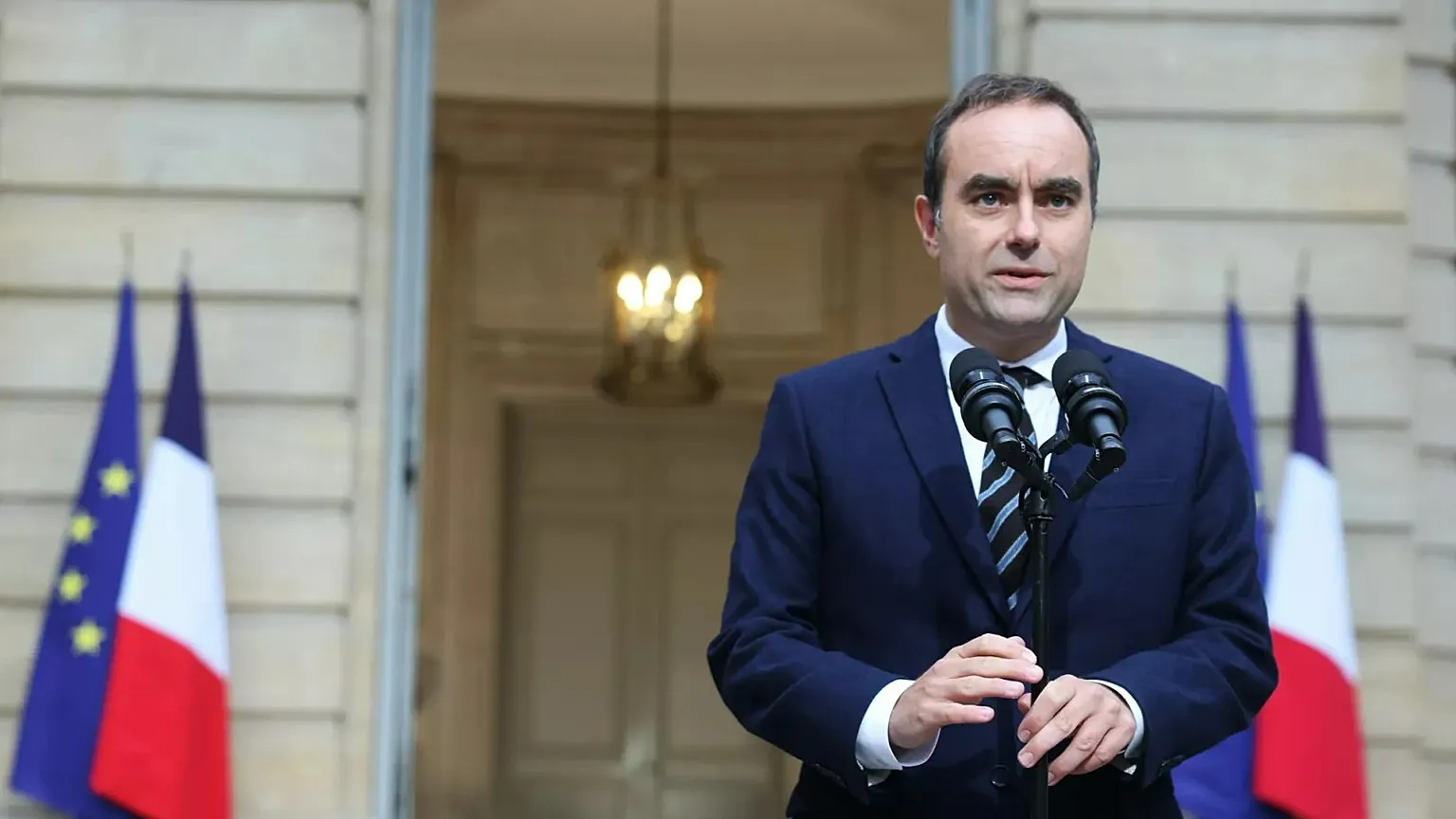
His sudden exit marks the shortest term for a prime minister in modern French history and adds to the growing challenges facing President Emmanuel Macron.
The French presidency confirmed that Lecornu submitted his resignation, which Macron accepted.
“Mr Sebastien Lecornu has submitted the resignation of his government to the president of the republic (Macron), which he accepted,” the French presidency said in a terse statement.
His departure comes at a time when France is still struggling with the fallout of the 2024 snap elections, which left parliament deadlocked and Macron’s government weakened.
Analysts say Lecornu’s downfall was triggered by fierce opposition to the cabinet he unveiled on Sunday.
The right-wing Republicans (LR), unhappy with the lineup, hinted at pulling their support, throwing the government’s stability into question.
Financial markets reacted quickly, with the CAC 40, Paris’s main stock index, dropping more than two percent in early trading following the announcement.
Macron now faces uncertainty over his next move. He has repeatedly rejected calls to hold another round of snap elections and has ruled out stepping down before his mandate ends in 2027.
But political pressure is mounting as far-right leader Marine Le Pen and her National Rally (RN) party sense an opportunity to seize power in the next presidential race.
RN president Jordan Bardella predicted that new parliamentary elections could be called within weeks, adding, “The RN will be ready to govern.”
Sebastien Lecornu, a loyal Macron ally and former defence minister, had been appointed on September 9.
But his decision to stick with an almost unchanged cabinet sparked criticism from across the political spectrum. The lineup included long-serving finance minister Bruno Le Maire, who was moved to the defence ministry.
The prime minister was already facing an uphill battle and needed parliamentary approval for next year’s austerity budget, something his two predecessors failed to secure. Both François Bayrou and Michel Barnier were forced out in clashes with lawmakers over spending plans.
France’s financial troubles loom large in the crisis. Public debt hit record levels last week, with the debt-to-GDP ratio now the third highest in the EU, after Greece and Italy, and nearly double the EU’s official ceiling.
Previous governments managed to push through three straight budgets without a parliamentary vote, a constitutional loophole heavily criticised by the opposition.
Lecornu, however, had promised to put this year’s budget to a full vote.
KanyiDaily recalls that Angela Rayner, the UK’s deputy prime minister, also stepped down after an inquiry found she failed to pay the correct stamp duty on a property.