World News
Sanae Takaichi Set To Make History As Japan’s First Woman Prime Minister

Sanae Takaichi has been elected leader of Japan’s ruling Liberal Democratic Party (LDP), putting her on track to become the country’s first woman prime minister.
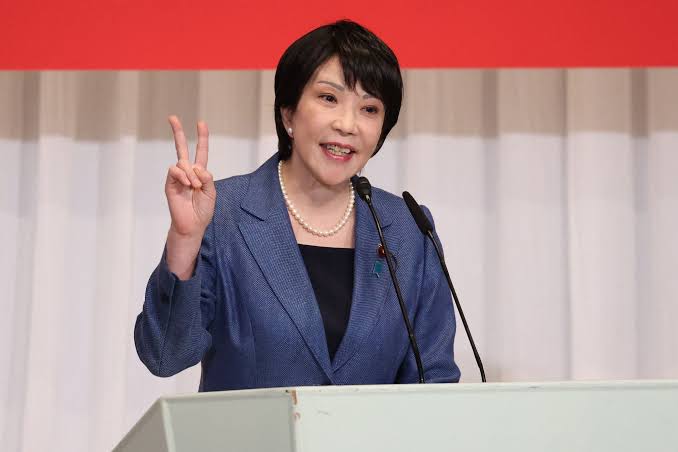
The 64-year-old conservative politician defeated Shinjiro Koizumi, the 44-year-old son of former premier Junichiro Koizumi, in a runoff vote.
Sanae Takaichi also overcame competition from veteran politician Yoshimasa Hayashi.
Once confirmed by parliament, which is expected, she will become Japan’s fifth leader in as many years.
Takaichi is known for her hardline positions on national defense, economic security, and immigration.
Analysts note that while her rise marks a symbolic breakthrough for women in Japanese politics, she does not represent a feminist agenda. Her policies lean heavily to the right within an already conservative party.
She has previously served as economic security minister and has been outspoken against China’s growing military influence in the Asia-Pacific.
Takaichi is also a frequent visitor to the controversial Yasukuni Shrine, which honors Japan’s war dead, including convicted war criminals, a move that has often sparked criticism from neighboring Asian nations.
During the leadership race, however, she softened her tone, avoiding the hardline promises she made in her previous bid for the top job.
Takaichi, once a drummer in a college heavy metal band, has cited former British prime minister Margaret Thatcher as her political inspiration.
On gender issues, her stance has drawn criticism. She opposes revising Japan’s family law that forces married couples to share one surname, a rule that disproportionately affects women.
While she has promised to improve the gender balance in her cabinet to “Nordic levels,” experts like Professor Sadafumi Kawato of the University of Tokyo believe such reforms are unlikely under her leadership.
Japan continues to rank low globally in terms of gender equality, placing 118 out of 148 in the World Economic Forum’s 2025 Gender Gap Report.
Takaichi has pledged to revive policies similar to former Prime Minister Shinzo Abe’s “Abenomics,” including aggressive monetary easing and large-scale government spending.
She is also pushing for stricter immigration controls and tighter oversight of foreign economic activity in Japan, an approach analysts say is aimed at regaining voters who have shifted to the nationalist Sanseito party.
She has additionally warned that she will press Washington for trade renegotiations if current agreements are seen as unfair to Japan.
Takaichi’s victory consolidates support from the conservative wing of the LDP and loyalists of the late Shinzo Abe, ensuring her a strong political base as she prepares to lead.
KanyiDaily recalls that Japan recently cancelled its “Africa Hometown” initiative, saying the programme created unnecessary confusion and was widely misunderstood.