Entertainment
Mr Eazi Reveals Why It’s Easier To Tour Europe And US Than Africa

Nigerian singer, Mr Eazi, said it was easier for him to organise shows in Europe and the United States than in African countries when he first broke into the music scene.
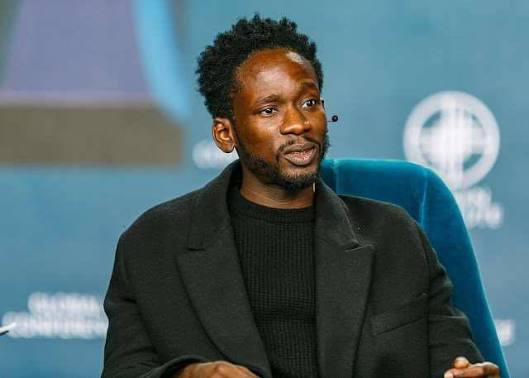
He made the remarks on Friday at the 2026 Africa Prosperity Dialogue, held under the theme “Empowering SMEs, Women and Youth in Africa’s Single Market: Innovate, Collaborate, Trade.”
The event was meant to discuss how to strengthen small businesses, support women and young people, and boost trade within Africa’s single market.
Looking back on the past decade, Mr Eazi said he spent about six years actively touring as an artist and four years building businesses.
“In the last ten years, I have spent six of those years as a singer touring the world and four of those years doing a lot of entrepreneurship. Two things stand out to me,” he said.
Mr Eazi said one of them was how difficult it was to move around Africa compared to travelling outside the continent during the early stage of his career.
He explained, “In the first six years of my rise, particularly the first two years of me blowing up, it was easier to tour America and Europe than it was to tour Africa, even though I had some of the biggest songs… once I had the number one song in Africa, touring here became even harder.”
The musician shared an example from Kenya, where he and his band ran into trouble at the border.
“I remember two occasions, one of me going into Kenya with my band. Even though I had been paid to perform, I was stopped at the border.
“My band, which included members of other nationalities, were allowed to enter, but I — the lead artist who was being paid the most — had to wait,” he added.
According to him, the experience highlights the larger issue of movement restrictions across African borders.
“That incident speaks to the reality of the friction that is being put in place — friction that stops us from uniting, stops us from being stronger, and prevents us from developing,” he said.
Mr Eazi argued that for the African Continental Free Trade Area (AfCFTA) to truly work, countries must move beyond agreements on paper and focus on real action.
“Borders as they currently function create friction in movements, in payments, in regulation and in the abilities of small and medium-scale enterprises to scale,” he said.
Drawing from his own ventures, he said he has invested in businesses operating in 19 African countries, including one company that handles about four million transactions daily.
“One of which I’m really proud of is a company that is live in 19 African countries and processes four million transactions a day,” he said.
He also stressed that young Africans are the most affected by cross-border limits.
“The young people under the age of 35, we actually don’t care about borders,” he said, noting that collaboration now happens “via the internet, via cross-border collaboration in business and in creativity.”
While recognising that trade frameworks like AfCFTA already exist, he said the main challenge is proper implementation.
Making it easier for people and businesses to move across borders, he added, does not mean weakening national sovereignty.
“We are not speaking about removing nations or weakening sovereignty. We are speaking of enabling the commitments already made and allowing people to move, trade, and build within Africa more efficiently, securely, and lawfully,” he said..
Mr Eazi noted that stronger connections between African countries would help small businesses grow into major continental players.
“A more connected Africa is how SMEs grow into continental champions,” he said.
“When Africa moves together, we do not lose strength. We multiply it… If we make Africa borderless, Africa becomes unstoppable.”
KanyiDaily recalls that Mr Eazi recently responded to online claims that he and his wife, Temi Otedola, have welcomed their first child.