Politics
Tinubu Signs New Order To Cut Oil Project Costs, Boost Investment And Revenue

President Bola Tinubu has signed a new executive order aimed at reducing the cost of oil and gas projects, encouraging more investment, and increasing government revenue from Nigeria’s energy sector.
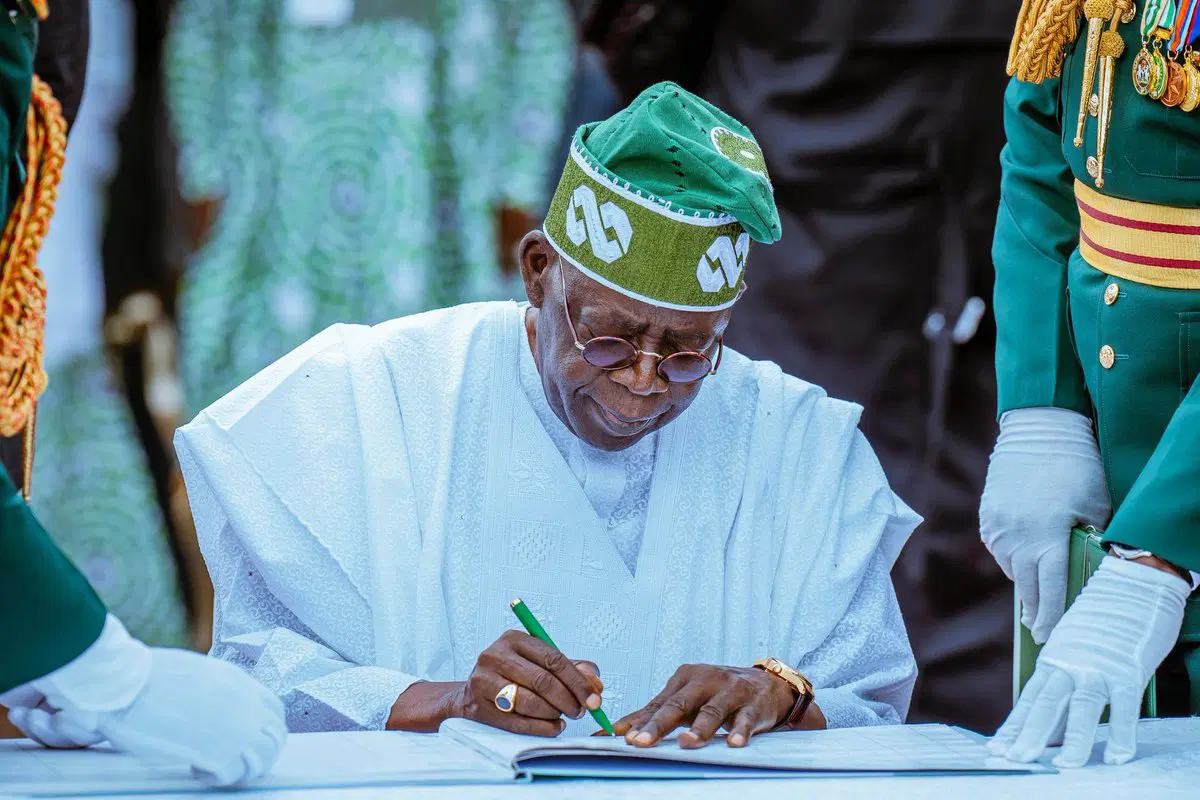
The new order, called the “Upstream Petroleum Operations Cost Efficiency Incentives Order (2025)”, was announced on Thursday by the president’s special adviser on energy.
It introduces a limit on how much companies can claim in tax credits—capping it at 20% of their total annual tax payments.
Tax credits help companies reduce the amount of tax they owe.
Under the new rules, oil and gas firms can only get these credits if they show real cost savings, based on performance and efficiency.
The statement reads, “The Nigerian Upstream Petroleum Regulatory Commission (NUPRC) will publish these benchmarks annually according to terrain onshore, shallow water, and deep offshore.
“Additionally, detailed implementation guidelines for the new Order will be issued in due course. Among other provisions, the Order also caps available tax credits at 20% of a company’s annual tax liability—protecting government revenues while still offering strong fiscal terms to incentivize efficient operators.”
Speaking on the new order, President Tinubu said the move is part of a broader effort to make Nigeria’s oil and gas sector more competitive.
“This Order is a signal to the world: we are building an oil and gas sector that is efficient, competitive, and works for all Nigerians. It is about securing our future, creating jobs, and making every barrel count,” he said.
To make sure the plan runs smoothly, Tinubu has appointed his energy adviser, Olu Verheijen, to lead coordination between government agencies and track progress on the new policy.
Verheijen emphasized that the focus isn’t just about cutting costs, but about building a stronger, more resilient energy sector.
She said, “It is a deliberate strategy to position Nigeria’s upstream sector as globally competitive and fiscally resilient.
“With this reform, we are rewarding efficiency, strengthening investor confidence, and ultimately delivering greater value to the Nigerian people.”
This latest executive order builds on previous reforms introduced by the Tinubu administration in 2024, which included faster project timelines, improved fiscal policies, and updates to local content rules to match international standards.
ALSO READ: President Tinubu List His Achievements In Second-Year Anniversary Speech [Full Text]